Adoring Traditional Dental Bridges – Best in 2022

SOLUTIONS TO MISSING TEETH

Feel more confident by filling the gap using traditional dental bridges.

We never really notice just how important our teeth are until we lose them. If you have lost a tooth, you are probably struggling daily with biting and chewing. You may even feel conscious about talking, smiling, and laughing around other people.

Missing a tooth or teeth can really affect not only functionality but appearance as well. For this reason, many people choose to get it fixed as quickly as possible. This is where dental bridges come in.

A dental bridge is basically a false tooth known as pontic that is custom-made for you to replace your missing tooth. It is literally a “bridge” that connects the adjoining teeth. It is held in place by the two teeth on either side of the missing tooth/teeth. These teeth are known as abutment teeth.

traditional dental bridges

WHAT ARE THE DIFFERENT TYPES OF DENTAL BRIDGES?

There are different types of dental bridges. I will help you choose the best option depending on your needs and goals. Here are the four most common types of dental bridges I have learned.

  • Traditional dental bridge

These are the most common types of bridges. Traditional dental bridges consist of a false tooth/teeth or pontic that is held in place by crowns that are cemented on the abutment teeth located on both sides. This is possible when you have natural teeth on both sides of the dental gap.

  • Maryland dental bridge

A Maryland dental bridge is very similar to a traditional dental bridge. It also consists of a false tooth that is held in place by natural teeth or abutment teeth on both sides of the missing tooth/teeth. However, the difference is that with the Maryland dental bridge, the pontic has a framework of metal or porcelain that is bonded to the two abutment teeth.

  • Cantilever dental bridge

A cantilever dental bridge is a replacement tooth that is held in place by only one abutment tooth on one side, rather than two on both sides. This is a common option if you have a natural tooth only on one side of your missing tooth or teeth.

  • Implant-supported dental bridge

Implant-supported dental bridges use dental implants surgically placed into the jaw to hold the replacement tooth in place. One dental implant will be used for each missing tooth, and the implant secures the bridge so that it completely replaces the missing tooth. This is the strongest and most stable type of dental bridge as the foundational structure for the bridge is surgically placed into the jaw.

Why Do You Need A bridge?
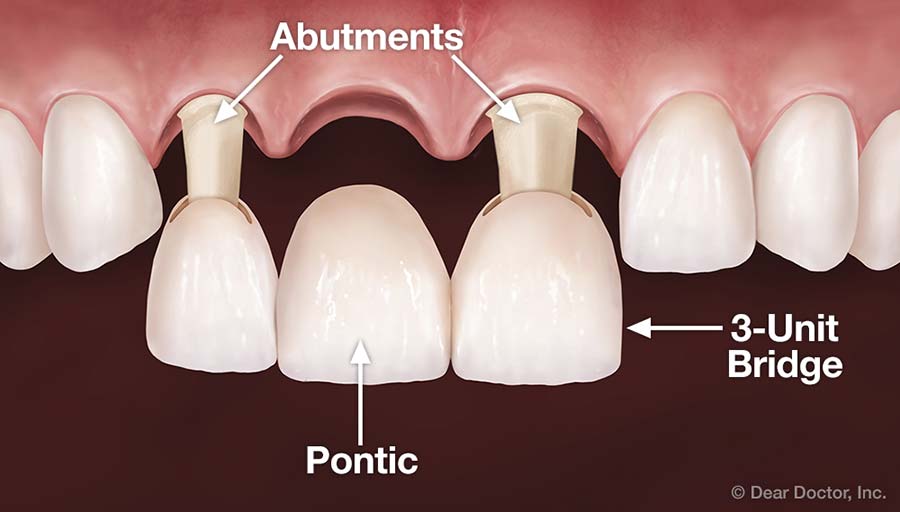
Dental Bridge

Unlike a chipped tooth a missing a tooth or teeth can be very debilitating. If a tooth is broken, we can use a metal free crown.

But missing tooth or teeth impair the functionality of your teeth in chewing and biting, making eating difficult as mentioned above. This can lead to further pain and damage. The teeth around the gap may even grow and tilt towards the empty space, thus causing serious misalignment. Your teeth are designed to work together as a whole, and when even just one is missing, you will see that it becomes a problem. The pressure provided by the ex-teeth are altered. Therefore, the arrangement changes.

Apart from this, missing a tooth or teeth affects your appearance and, consequently, your confidence. Smiling, laughing and talking – things that you used to do without thinking now make you feel conscious and uncomfortable around other people.

A missing tooth or teeth also affect the shape of your jawbone. When one or more teeth are missing, the bone can shrink, which can affect the way your lips and cheeks are supported. If this goes untreated for a long time, it can make your face appear older.
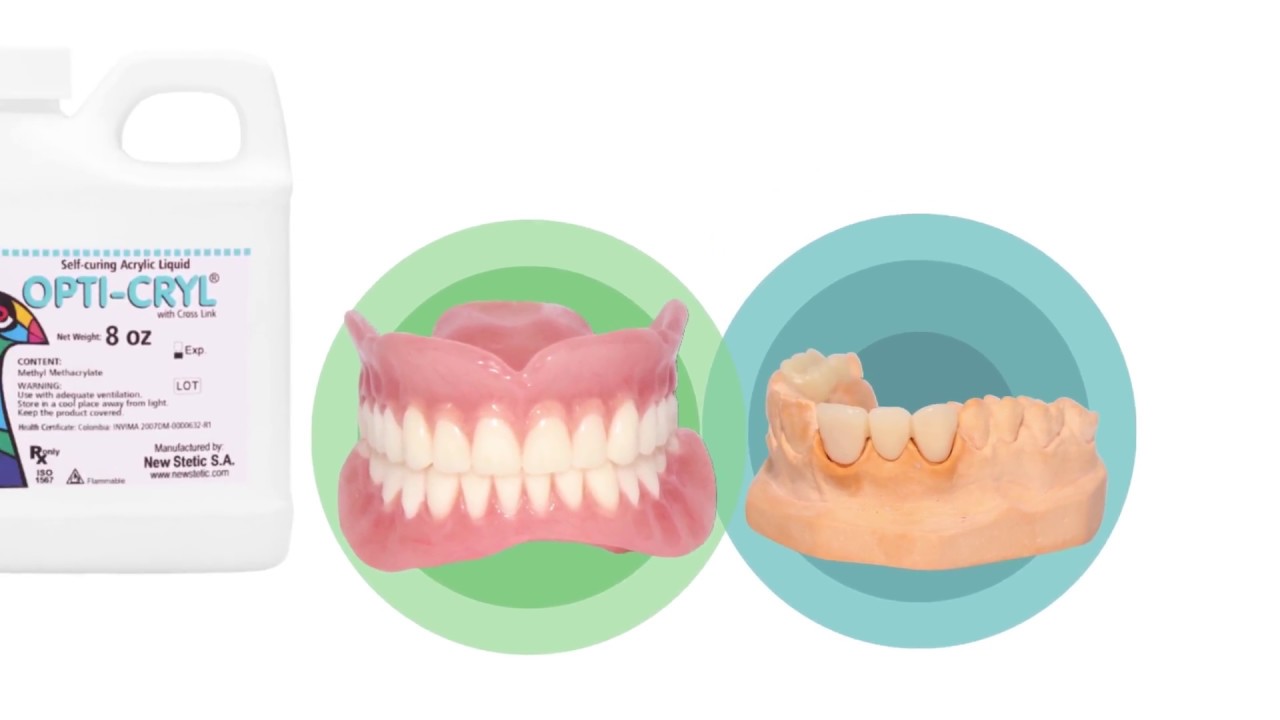
What is self-cure acrylic resin? best 1

Self-cure acrylic resins have been used mainly in prosthetic dentistry for the construction of custom-built impression trays, occlusion registration bases and for repairing fractured dentures. Recently, pour-type resins have been introduced for the fabrication of denture bases.

self-cure acrylic resin

What are the differences between heat cured acrylic resin and self-cure acrylic resin?

The principal difference between self-cure and heat-cure resins is that more residual monomer is present in the self-cure resins. In addition, with a high monomer to polymer ratio, residual monomer content in the polymerized acrylic resin would be large.

What is heat cured acrylic resin?

Introduction: Heat cure acrylic resins are the most commonly used denture base materials. The important limitation is they may act as reservoir of microorganisms. The adherence of microorganisms can be reduced by chemical modification of the surface charge of denture base resin.

What is cold cure acrylic resin?

Bonding of cold-curing acrylic resin to acrylic resin teeth increases tooth retention and strengthens denture bases because the plastic teeth become an integral part of the denture base. The bonding was verified in experimental dentures made of a compression molded and a pour type poly(methyl methacrylate).

What is acrylic resin used for?

Acrylic resins feature excellent transparency and durability, and are used in a broad range of applications from consumer items like lenses to industrial products like molding materials, coatings and adhesives.

What is denture base resin?

Definition • DENTURE BASE: The part of a denture that rests on the foundation tissues and to which teeth are attached. • RESIN: A broad term used to describe natural or synthetic substances that form plastic materials after polymerization. –

What is a separating medium?

Separating media are those substances which is used to separate two surfaces from each other. Separating media help to separate. A. Plaster surface to acrylic surface.

How do you treat acrylic resin?

In the long curing cycle the acrylic dough was cured at 72 °C for 6.5 h and then 92 °C for 1.5 h. The flasks were left undisturbed in the curing tank for at least 36 h to allow the acrylic resin to cool slowly to the ambient temperature (24–28 °C).

What are acrylic resins used for?

About Acrylic Resins Due to their excellent durability and weatherability as coating materials, acrylic resins are used extensively in applications such as automotive, architectural and plastic coatings.

How long does cold take to cure acrylic?

Figures. curing technique- 15 minutes); G3) cold cure acrylic resin (Ivomat curing technique- 20 minutes). acrylic polymerized chemically on air and under hydraulic press.

Can I use a hair dryer on resin?

Option 3: Turning a hair dryer into an epoxy dryer If there’s one thing resin bubbles can’t stand, it’s the heat. You can actually use a hair dryer to pop bubbles; however, the heat a hairdryer provides is less potent than that of a butane or propane torch.

How big is an acrylic monomer heat cure?

Opticryl- Monomer Self Cure only 8oz (Acrylic Resin Liquid) New Stetic veracryl – This Product can only be Shipped by Ground Transportation- it Cannot… Opticryl Dental – Heat Cure Monomer Only 32oz/Quarter Gallon (Acrylic Resin Liquid)…

Which is the best acrylic resin for dental use?

Opticryl Dental – Heat Cure Monomer Only 8oz (Acrylic Resin Liquid) veracryl – This product can only be shipped by ground transportation- it… Dental Combined Organizer, Acrylic Holder Dispenser for Resins, Applicators, Clinic…

What kind of resin is used for dentures?

Denture acrylic resins are used for the base of dentures. They may be traditional heat-cured, cold-cured or self-cured.

The Pros and Cons of Thermoplastic Partial Dentures

The Pros and Cons of Thermoplastic Partial Dentures

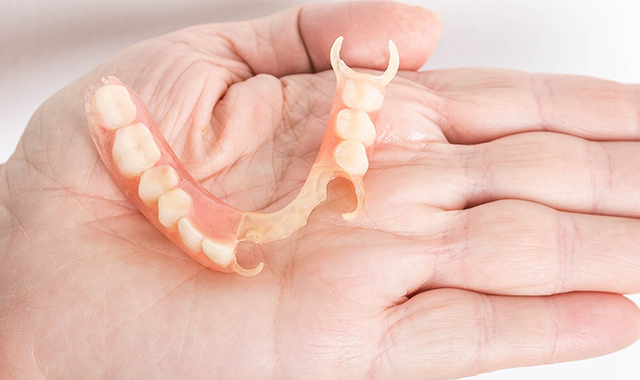
Thermoplastic materials have been available in prosthetic dentistry for more than 30 years and the market place continues to grow with new and existing companies manufacturing their own products.

What makes these dentures different from traditional partial dentures is the material from which they are made and how they are made.

Unlike acrylic dentures, they are made from a thermoplastic nylon resin that is ultra thin, very flexible (think more comfortable for chewing and speaking) and is so durable that one company – Valplast – offers a lifetime warranty for fractures or breaks.

The material doesn’t absorb odors or stains, and if patients suffer from allergies to acrylic or certain metals, it’s a great choice. It contains no BPAs and is considered the most biocompatible material.

Some patients feel that the appliance “disappears” or is “invisible” in their mouth, thus the esthetics of it is far superior to conventional acrylic/metal partial dentures.

The cost may be slightly higher than conventional acrylic partial denture because the fitting and finishing time at the lab is increased, but the result makes it well worth it. 

Thermoplastics like Flexite, TCS (IFLEX) and Valplast all differ from regular thermosets like acrylic powder and liquid because they are already polymerized (cured) when manufactured and shipped to your lab. They can be manufactured in many forms, from sheet to pellets to powder. Once heat is introduced, the plastic is softened to the desired state and then injected into a mold. The only thing that changes is its physical shape; there are no actual chemical changes. Thermoplastics will differ depending on their molecular composition – some require higher temps to become moldable and some require greater injection pressures.

One advantage of this material is that there is also flexibility in the design of the types of clasps. We can often use the circumferential ring clasp on any freestanding tooth and it works well on medially tipped mandibular molars. It can make an excellent transitional restoration during the healing period on implant cases.

Your dental lab will have its preference for which thermoplastic material it prefers to work with. Some are more difficult to finish, fit and adjust than others. Some may require more repairs to the teeth than others. Some may prefer a specific material because of the color blending. A conversation with your technician will help you decide the best material for your patient. Click this link for a video lesson on communicating with your technicians.

The biggest challenge for the dentist is the adjusting and polishing of the material. Do not think acrylic when polishing by using a quick and pressure-applied motion. Think of dividing the appliance in sections and spending one minute per section. That will seem like a long time when your experience is only conventional acrylic resin.

Whether or not you are using Valplast, Flexite, TCS or Iflex, each company has a system for polishing. If you are going to provide these partial dentures, be sure you have the armamentarium to polish them well. 

The partial needs a smooth and satin finish before polishing so use the appropriate rubber wheels.  I typically round the edges of the wheel when I receive them so that I don’t accidentally cut into the nylon with a sharp edge. If there are any spots that the wheel cannot access, I recommend using a Robinson wheel in a horizontal motion with a light dusting technique. 

Patients are very happy with these prostheses because they are fabricated readily and don’t require multiple try-in appointments. I suspect in the future we will make very few traditional metal acrylic removable partial dentures as this material excels for all our patients. The challenge for us is in adjusting it.

Metal Free Crowns

CROWNS SO NATURAL LOOKING YOU’LL THINK THEY ARE REAL TEETH.

A chipped tooth can ruin your appearance and also increase the risk of long-term dental damage. Crowns are the best way to protect your teeth and ensure they’re safe from harm. Metal-free crowns are teeth restorations that are entirely made of ceramic, providing high aesthetic value. The most favourable part about metal-free crowns is that they look very similar to natural teeth, making them the more favoured option today.

WHY ARE METAL-FREE CROWNS RECOMMENDED?

The metal-free crowns available in the dental world today are highly praised for their biocompatible nature. For this reason, several patients prefer to opt for this procedure while also experiencing added benefits. Metal-free crowns are made of high-quality materials and are also very durable. For a sensitive area like the teeth, it is important to go for the more comfortable option, which will not cause you any discomfort in your day-to-day life; therefore metal-free crowns are the best option.

Metal-free crowns are recommended for those who have a tooth that is damaged but has remained attached in the mouth. The crown will be placed in this area to mitigate the ill-effects of decaying teeth.

The mechanical properties of metal-free crowns align with the more traditional metal-ceramic crowns, but they also have other advantages.

There have been several technological advancements in porcelain manufacturing and adhesion, which means that dentists can save more teeth with the help of many different metal-free crown options. In traditional metal-ceramic crowns, the metal alloy portion of the fitting is fused with dental ceramic in order to give it a more appealing appearance.

HOW DOES THE PROCEDURE WORK?

The procedure requires the dental substance to be removed, which means that the teeth will have to be filed down in order to start with the procedure. With metal-ceramic crowns, the dentist will have to file down 1.5-2.0mm of dental substance, making it a more arduous procedure.

On the other hand, the option of metal-free crowns will require the dental experts only to remove 0.3-1.0mm of dental substance, making it a more comfortable procedure for you.

After this, the dentists will take an impression of your bite and then go on to prepare a mould for the crown. The porcelain used for the procedure will have to be colour-matched with your natural teeth in order to give it a more natural appearance. It is common for you to be fitted with a temporary restoration until the permanent fitting for your teeth is ready to be fitted.

WHAT ARE THE CROWNS MADE OF?

Metal-free crowns are most often made of zirconium or lithium-disilicate ceramic. These elements allow the material to have a few similarities with glass, especially making them light and transparent. These properties make the metal-free crowns as resistant as natural teeth.

After the treatment, the dental experts will guide you with the aftercare required for the maintenance of your crowns. You may experience some sensitivity to hot and cold substances, which will subside soon.

WHAT ARE THE PRIMARY ADVANTAGES OF METAL-FREE CROWNS?

The most natural-looking restorations – Metal-free crowns are made with all-porcelain, which will provide you with the most natural-looking solution for damaged teeth. With metal or metal-ceramic fittings, you may have noticed that the black lines of the fitting are visible, especially around the gum line. This line will be a constant reminder of the crowns. On the other hand, with metal-free crowns, the light passes through the porcelain material in a fashion similar to that of the natural tooth enamel, making your smile bright and radiant.

Easy shade matching – The option of metal-free, porcelain crowns makes it much easier for our dental experts to shade match your teeth with the crown. There are several customized porcelain shades available that match the natural teeth, which can be shined with natural light lamps, ensuring that it offers proper reflection before they can be placed.

High Durability – The metal-free crowns are made with porcelain, which is very durable, making it the right choice for our teeth. The option of porcelain makes it even better for someone who is suffering from tooth decay. The material used for the procedure is long-lasting and can protect you from bacteria and other germs that are responsible for tooth decay.

Say bye to allergic reactions – One of the biggest advantages that come with metal-free crown restorations is that it does not cause any allergies. The traditional metal crowns can cause the gums and sockets of the teeth to become inflamed and irritated, causing you much discomfort. Metal-free crowns are made to avoid causing any reactions in the surrounding tissue, which also enables the gingiva to shape around the crowns, just like natural teeth.